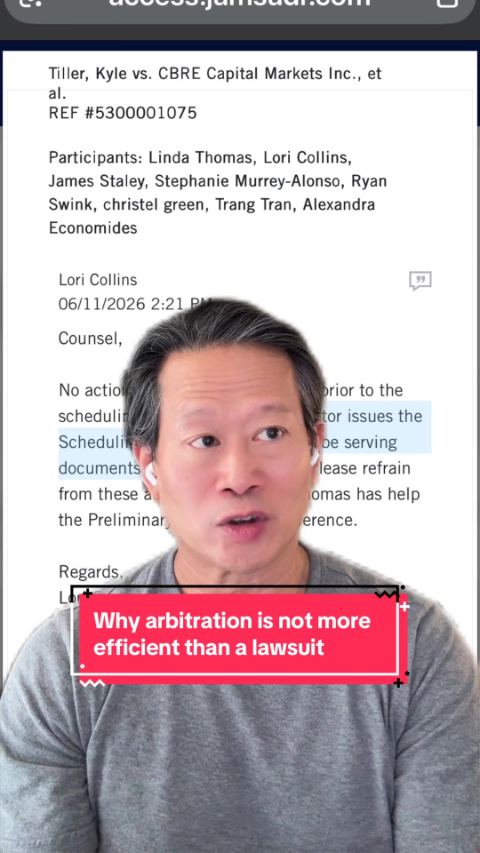
Employers often sell mandatory arbitration as a faster, cheaper way to resolve workplace disputes. For employees, the picture is more mixed.
The promise versus the reality
- Speed varies. Some arbitrations finish quickly, but scheduling an arbitrator, exchanging documents and holding hearings can still take many months. Delay is not guaranteed to be shorter than court.
- Costs can be higher. In court the public pays the judge. In arbitration, parties may pay arbitrator and administrative fees, which can be significant depending on the agreement and the provider rules.
- Limited discovery. Fewer depositions and document requests can make it harder to prove what managers knew and why they acted.
- Almost no appeal. If the arbitrator makes a legal mistake, there is very little a court can do about it.
- Privacy favors the repeat player. Confidential proceedings keep patterns of misconduct out of public view.
What the research suggests
A widely cited 2011 empirical study by Alexander Colvin reported that employees won about 21.4 percent of employment arbitrations in the data studied. Later work by Colvin and Gough, and commentary such as Estlund’s article on the “black hole” of mandatory arbitration, examines the same concerns. Studies differ, so read them for yourself.
The legal landscape
In Epic Systems v. Lewis (2018), the Supreme Court enforced agreements that require individual arbitration and waive class or collective actions. Congress has carved out some claims: the 2022 law at 9 U.S.C. section 402 lets people with sexual harassment or sexual assault disputes avoid forced arbitration.
Before you sign
Check who pays fees, where hearings occur, whether you can opt out within a set time, and which claims are covered. Keep a copy of anything you sign.
Watch the video
Watch on TikTok @overtimelawyer
Additional Resources:
- Epic Systems Corp. v. Lewis, 584 U.S. ___ (2018) on Justia
- 9 U.S.C. section 402 (sexual harassment and assault disputes) on Cornell LII
- Search: Colvin, An Empirical Study of Employment Arbitration (2011)
Follow @overtimelawyer on TikTok for more employment law updates.
This article is general information, not legal advice. Every situation is different and laws change, so talk with a licensed attorney about your specific facts.
