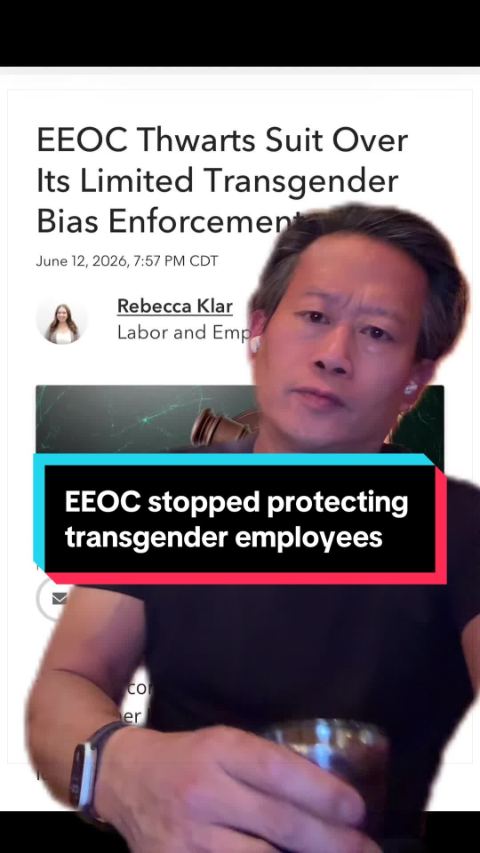
Headlines say the EEOC “stopped protecting” transgender employees. The truth is more nuanced: the agency changed its priorities and guidance, but the statute and the Supreme Court have not changed.
What did not change: Bostock
In Bostock v. Clayton County (2020), the Supreme Court held that firing someone for being gay or transgender is discrimination “because of sex” under Title VII. That is a Supreme Court ruling, and agency guidance cannot overrule it.
What did change
- In Texas v. EEOC (N.D. Tex., May 15, 2025), a federal court vacated the gender-identity portions of the EEOC’s 2024 harassment guidance.
- According to the research we reviewed, the EEOC then rescinded the 2024 harassment guidance in January 2026.
- A challenge to the EEOC’s changes, FreeState Justice v. EEOC (D. Md., June 12, 2026), was dismissed for lack of standing, so it did not decide the underlying question.
The practical result is that the EEOC may be less likely to prioritize these charges. Guidance documents are not the same as law, however, and Title VII still applies.
Protecting your claim
- Still file on time. The deadline to file a charge is generally 180 days, or 300 days in Texas for many federal claims. Do not skip it because you heard the agency is not interested.
- Document everything. Save emails, messages, policies and the names of witnesses.
- Expect a right-to-sue notice. After a charge, you may be able to bring your case in court, which is where Bostock is applied.
- Get advice early. Courts are still working out how these rules apply to bathrooms, dress codes and pronouns.
If you have been fired, harassed or denied a promotion, the law may still protect you even when agency leadership has changed.
Watch the video
Watch on TikTok @overtimelawyer
Additional Resources:
- Bostock v. Clayton County, 590 U.S. 644 (2020) on Justia
- 42 U.S.C. section 2000e-2 (unlawful employment practices) on Cornell LII
- EEOC: Time limits for filing a charge
- Search: Texas v. EEOC (N.D. Tex. 2025) on CourtListener
Follow @overtimelawyer on TikTok for more employment law updates.
This article is general information, not legal advice. Every situation is different and laws change, so talk with a licensed attorney about your specific facts.
