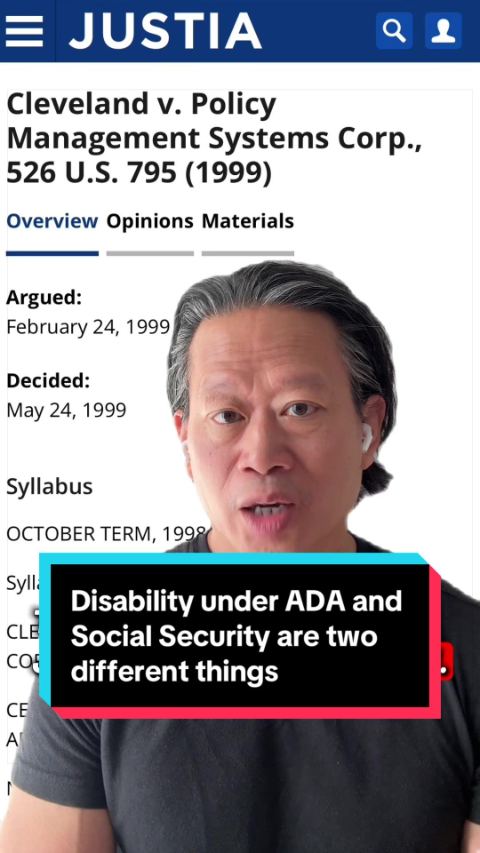
Many workers assume that if you qualify for Social Security disability benefits, you automatically have protection under the Americans with Disabilities Act (ADA), or that applying for benefits means you give up your job rights. Neither is exactly true, because the two systems define disability differently.
Social Security disability
Social Security Disability Insurance (SSDI) is an insurance program. To qualify, you generally must show that you cannot engage in substantial gainful activity because of a medical condition expected to last at least a year or result in death. The question is whether you can work at all.
The ADA
The ADA is a civil rights law. It protects a “qualified individual,” meaning someone with a disability who can perform the essential functions of the job with or without reasonable accommodation. The question is whether you can do this job if your employer makes reasonable changes, such as modified schedules, equipment or duties.
Can you do both?
In Cleveland v. Policy Management Systems Corp., the U.S. Supreme Court held that pursuing SSDI benefits does not automatically bar an ADA claim. But a worker must be prepared to explain apparent contradictions, such as saying “I cannot work” to Social Security while saying “I can do the job with accommodation” in an ADA claim. Often the explanation is that Social Security does not consider reasonable accommodation.
Protect yourself
- Request accommodations in writing and keep copies.
- Be consistent and accurate in every application and form.
- Keep medical documentation about your restrictions.
- Watch deadlines for filing an EEOC charge.
Disability issues often overlap with leave rights and unpaid wages. An employment lawyer can help you understand how benefits and job protections fit together.
Want more quick legal updates for workers? Follow @overtimelawyer on TikTok.
This article is general information, not legal advice. Every case depends on its own facts, so talk to an employment lawyer about your situation.
Watch the video
Watch on TikTok @overtimelawyer
