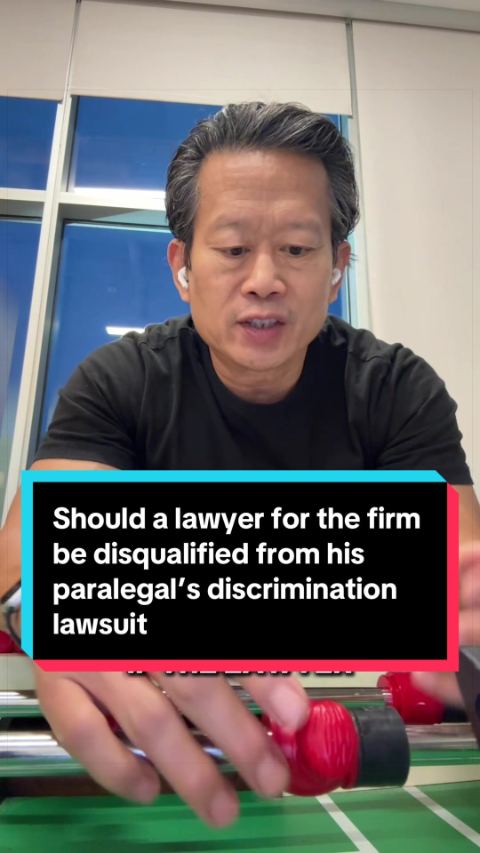
A July 2026 report by Mealey’s and Law360 described a lawsuit by a former paralegal of the firm Burandt Adamski Feichthaler & Sanchez PLLC. According to the report, she asked a Florida federal court to disqualify an attorney from serving as trial counsel in her pregnancy discrimination case. These are allegations in a court filing, not findings.
What is a motion to disqualify?
It asks a court to remove a lawyer from a case, usually because of a conflict of interest, confidential information, or because the lawyer is likely to be a witness. Courts take these motions seriously, but they also treat them cautiously because they can be used as a tactic to disrupt the other side.
Rules courts look to in Texas
- Confidential information (Rule 1.05). Lawyers must protect client information.
- Conflicts (Rules 1.06 and 1.09). These limit representing a party against a former client or in a related matter.
- Imputation (Rule 1.10). Conflicts can extend to other lawyers in the firm, and the rule was amended effective October 1, 2024 to address screening.
- Lawyer as witness (Rule 3.08). A lawyer who is a necessary witness may not be able to act as trial counsel.
In In re Nitla, the Texas Supreme Court addressed disqualification of counsel based on a nonlawyer’s prior access to confidential information. The Court explained that a firm may need to show screening to avoid disqualification.
Takeaways
A conflict motion usually turns on specific facts: who had access to what information, when, and whether the firm acted to protect it. Employees who work in law offices should also remember that confidentiality duties continue after they leave, and that employment claims against a law firm are litigated like any other.
Watch the video
Watch on TikTok @overtimelawyer
Additional Resources:
- Texas Disciplinary Rules of Professional Conduct (State Bar of Texas)
- Search: In re Nitla, 92 S.W.3d 419 (Tex. 2002)
- News report: Law360 / Mealey’s, July 13, 2026 (may require a subscription)
Follow @overtimelawyer on TikTok for more employment law updates.
This article is general information, not legal advice. Every situation is different and laws change, so talk with a licensed attorney about your specific facts.
